Simulated DoorDash Automated Drone Delivery
Launch Plan + Agile Execution

IMT 587: Principles of Product & Project Management
Project Overview
This was a graduate course project for IMT 587 (Principles of Product & Project Management) at the University of Washington. Using DoorDash as a realistic business case, our team was assigned to design a full project plan for a hypothetical drone delivery pilot. This included scope, budget, risk, and a formal change request while running the project itself in agile sprints with rotating Project Manager, Product Manager, Product Owner, and Scrum Master roles. The assignment doubled as a hands-on simulation of classical project management and agile delivery side by side, letting me apply and compare both frameworks against the same problem.
The Problem
The assignment framed DoorDash's reliance on human drivers for last-mile delivery (high labor costs, inconsistent delivery times) as the business problem, noting that real competitors (Uber Eats, Grubhub, Kroger) were investing in automated delivery. From that prompt, our team was tasked with producing a complete, launch-ready project planfor a hypothetical drone delivery pilot, and with running that project itself using agile methodology.
Our Approach
This project had two layers, and I worked on both.
• Classic Project Management • Agile Execution
Classic Project Management
Defined a hypothetical MVP scope and pilot market (Tacoma, WA) based on proximity and rapid-testing feasibility
Authored the project plan, breaking the work into phases (Logistics → Pitch → Feedback) with task-level duration and status tracking
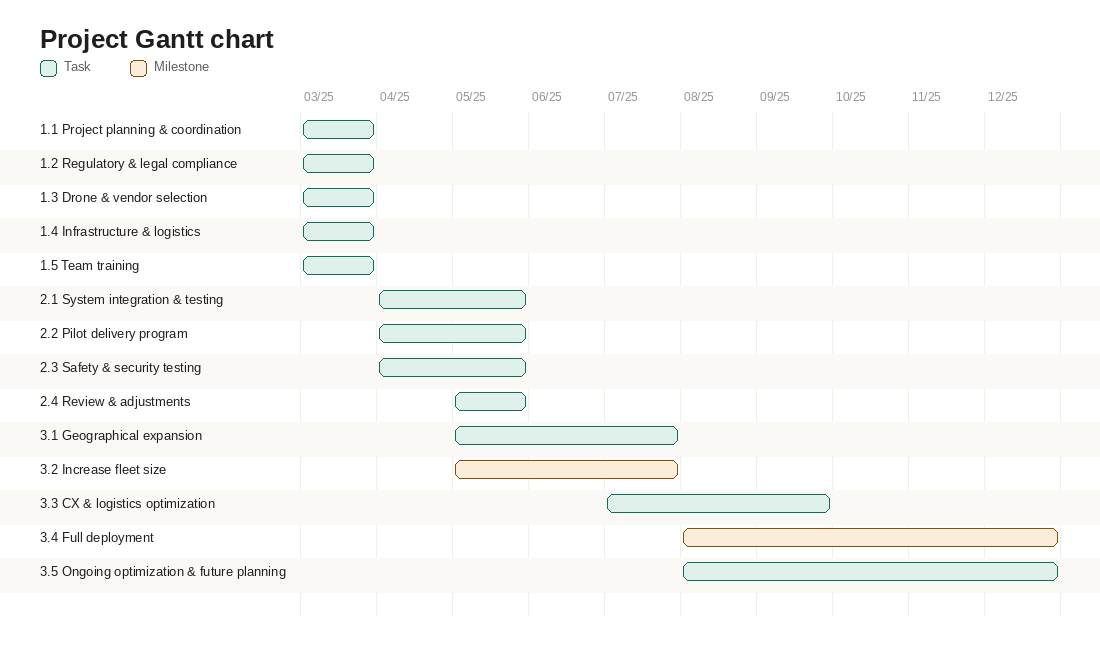
Built a full Work Breakdown Structure and Gantt chart sequencing dependencies across prep, testing, and scaling
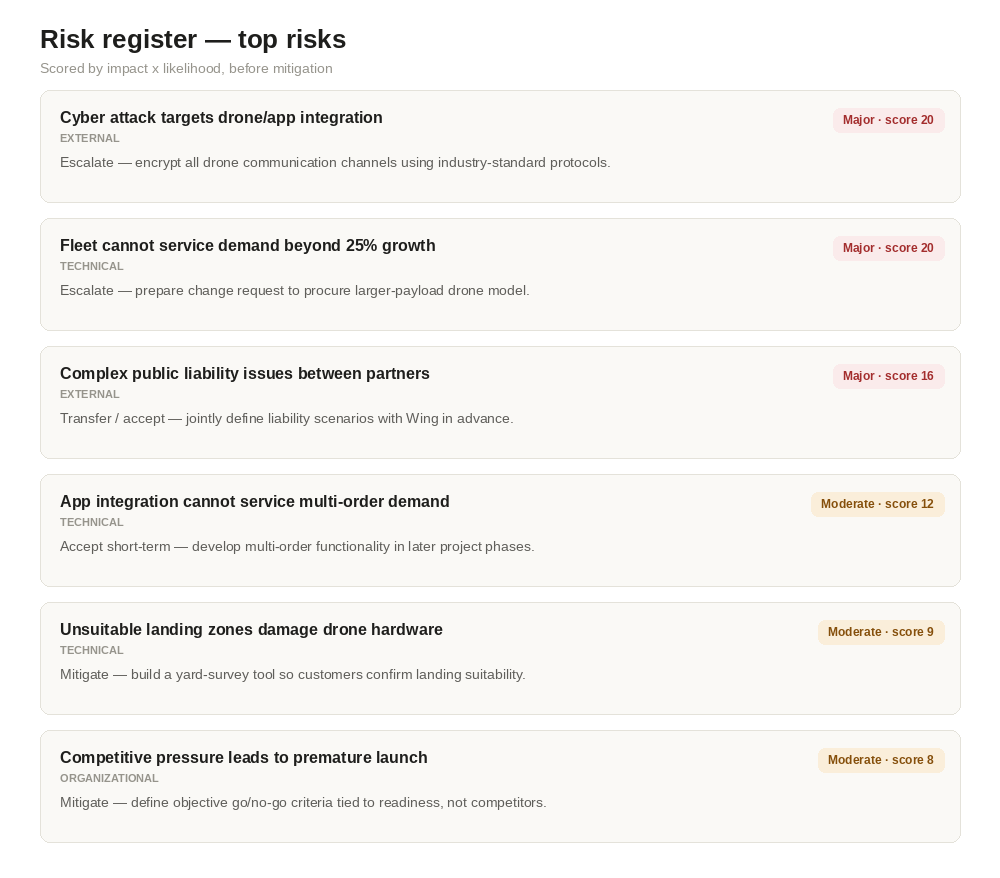
Ran a formal risk identification and analysis exercise — 12 risks scored by impact/likelihood, with mitigation, transfer, and escalation strategies
Authored a change request when new information was introduced into the scenario (a larger drone model), including cost-benefit and risk re-evaluation
MVP: Driven by DoorDash’s Mission to empower local communities through equal access
WHAT? Flying Robots with Enhanced Software
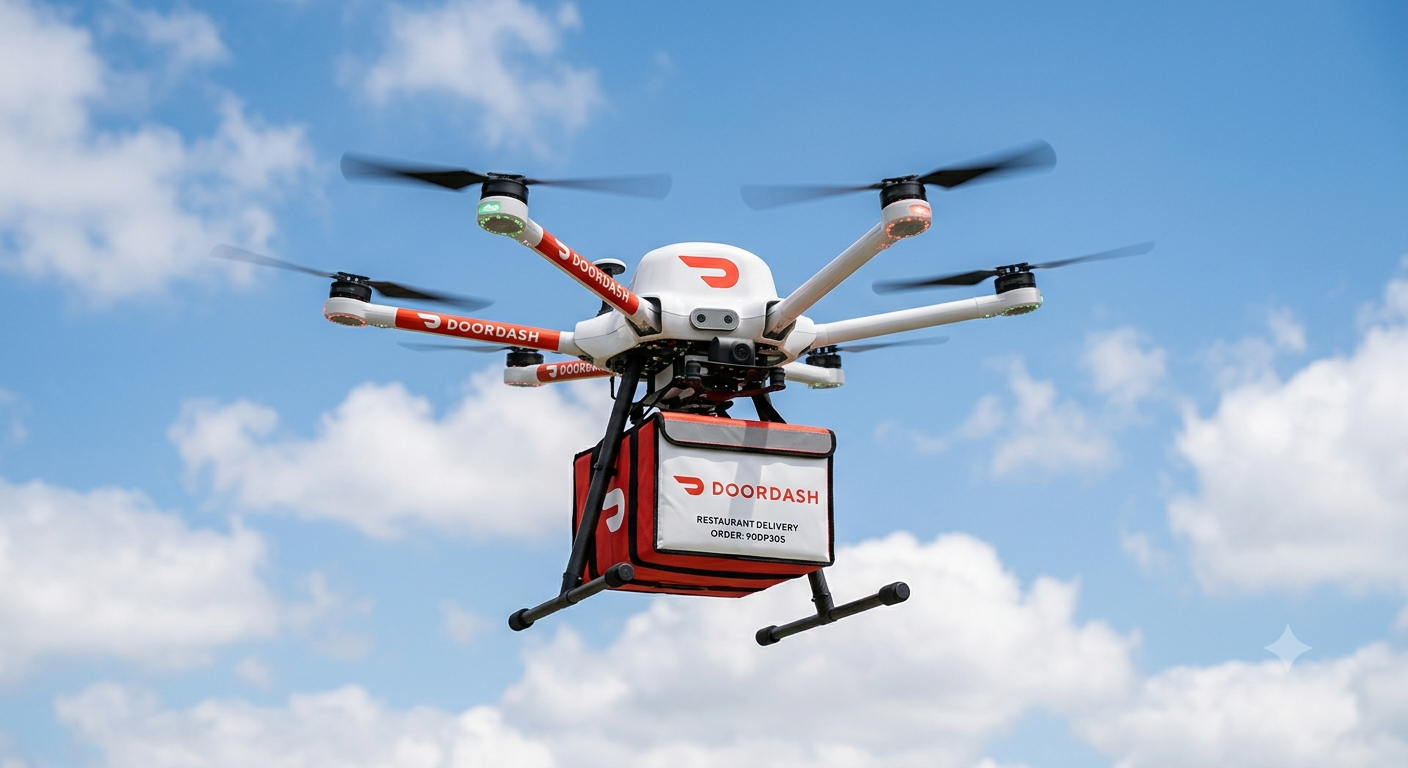
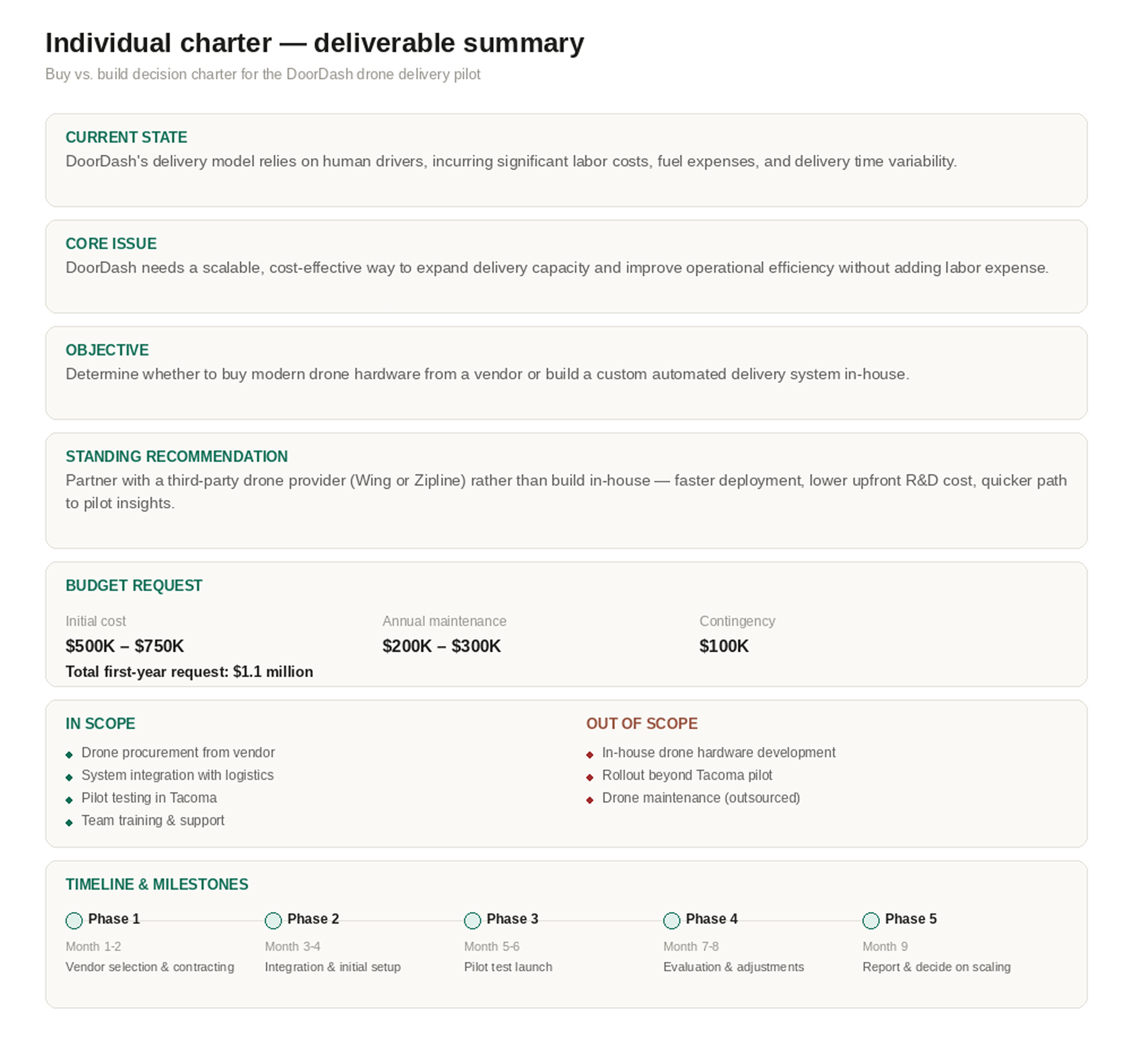
DoorDash will partner with Wing - an established leader in the US drone delivery market - to procure a fleet of drones with advanced safety systems, real-time tracking, and seamless integration with our app.
150 DashPass subscribers will get a 30-day drone delivery trial, experiencing the future of food delivery.
WHERE? Tacoma, WA
Tacoma is the ideal location—close to Seattle yet small enough for rapid engagement during the pilot phase.
WHY? Never ending Improvement
Customers need faster delivery times with sustained affordability
We must expand to our DoorDash base in harder-to-reach areas.
Business efficiency relies on this rapidly emerging tech.
HOW? Realistic Scaling
Partnership with Wing Aviation LLC
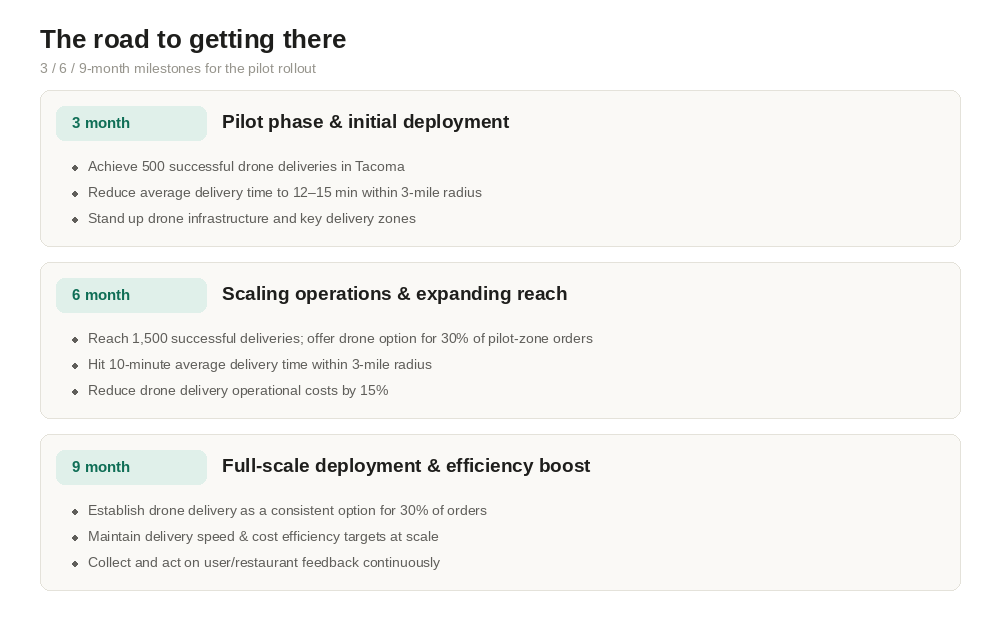
9 month pilot phase
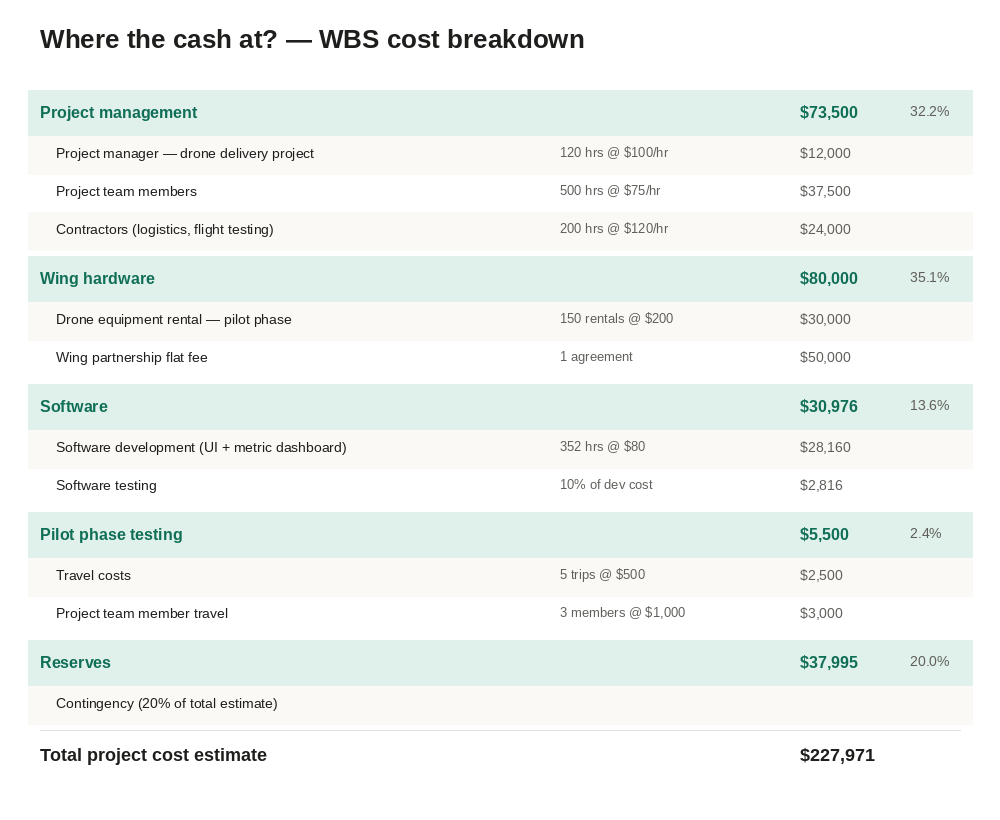
WBS Level 1 Cost: $228,000




Agile Execution
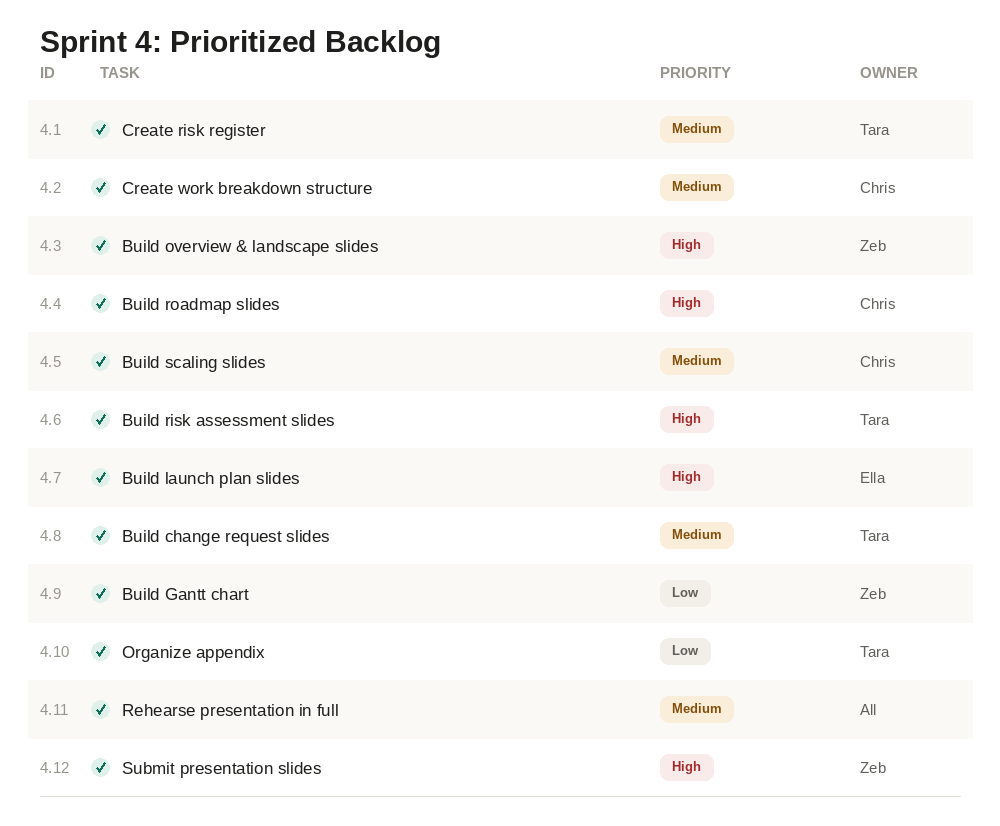
Wrote and matured user stories across two iterations, using MoSCoW prioritization and story-point estimation
Ran sprint planning, daily stand-ups, and structured peer feedback sessions on teammates' user stories
Maintained a prioritized sprint backlog (12 tasks, owners, status) to keep the team's deliverables on schedule
Rotated through all four Scrum roles as part of the course structure, building direct comparative experience across each function
Project Manager • Product Manager • Product Owner • Scrum Master
What we delivered
A complete, dual-format launch plan submitted as our final course deliverable:
a 9-month phased roadmap for a hypothetical drone delivery pilot with Wing Aviation
a $228K WBS-level cost estimate, a cross-functional launch plan (customer service, ops, compliance, go-to-market)
a formal change management process
all produced through an agile sprint cadence that kept our four-person team aligned across rotating roles.
As part of the assignment, I also co-developed a mock press release and FAQ, along with an internal FAQ tying the hypothetical launch to sample OKRs (customer satisfaction, revenue growth, operational efficiency) — practicing how to translate the same plan for two different audiences.
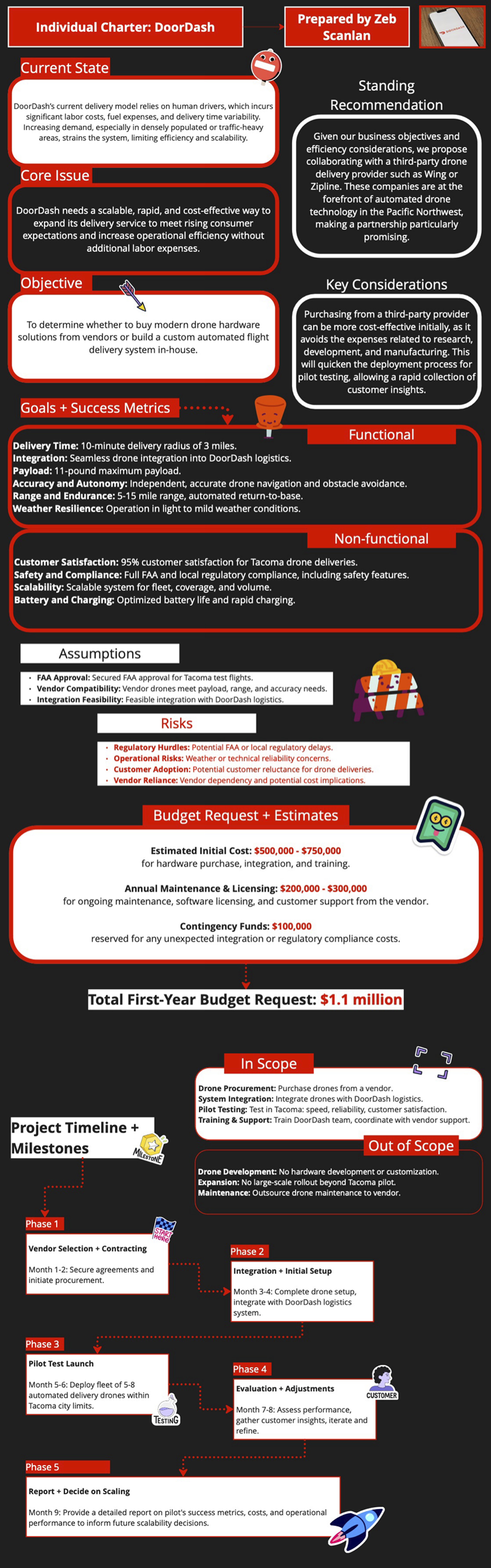
Role Rotations:
What each role taught me
As part of the course design, our team rotated through Project Manager, Product Manager, Product Owner, and Scrum Master each sprint. That gave me working fluency across all four:
As Project Manager, I enjoyed building the project plan and phase breakdown while translating an open-ended brief into sequenced, dated tasks.
As Product Manager, I led with an OKR and strategy focus while tracking financial viability, and deciding feature prioritization.
As Product Owner, I loved translating feature ideas across user stories and translating these needs into acceptance criteria while being the professional entity between the “customer” and my team.
As Scrum Master, I ran stand-ups and facilitated rather than directed while learning how much invisible coordination work keeps a team aligned, and how much of it goes unnoticed until it's missing.
What I took from this project
Produced a fully costed, phased project plan with quantified milestones (500 → 1,500 → citywide deliveries, per the assignment scenario)
Identified and pre-mitigated high-severity risks (cybersecurity, fleet capacity bottlenecks) as part of a structured risk management exercise
Practiced formal change control: evaluated a mid-project scope change, quantified its cost/schedule impact, and took it through a sign-off process
Helped keep a four-person student team on schedule across a full sprint cycle, with 100% of backlog items completed on time
Built working, comparative fluency across all four core Scrum/PM roles — a rare structure for a single course project, and directly relevant to Business Systems Analyst / Product Owner hybrid roles